Uncategorized

Who Knows Where the Time Goes?

This gentle tune has been floating in my head now for weeks, probably for all sorts of reasons.

I start to do something and then discover, days or even weeks later, that I haven’t finished or completed it.  I start to call friends and get interrupted, only to realize that I didn’t, and in fact haven’t talked to them in weeks.

I understood why this went on during Dad’s last months, and in the months immediately following his death.  But now?  Now when I think I’ve awakened from some kind of protective hibernation?

The last post is an example of this:  I actually wrote and posted it last month, except for some reason it didn’t appear.  I kept thinking I needed to log on and take care of the problem, but something always happened.  Today, though, as February is almost over, I actually did it.  One click and it’s posted.  Finally.

Some projects take my time — simultaneously I manage to play with my jewelry and crafts at times, sometimes with friends, but most often alone.  I manage this while the major project goes on around me:  kitchen renovations.

My kitchen was one of those projects that started 3 years ago and died a painful death.  I stopped because I ran out of money and time.  I was still teaching.  I was commuting more.  Then I was retired and living mostly in Egan with Dad.  It just remained an ugly eyesore in a house that screamed at me that it was being neglected.

It’s taken me months to locate someone (a) who could handle that and the porch project that must also get done and (b) who could be trusted.  Finally, after I forget how many phone calls and attempts to find someone, after the “I’ll call you back with an estimate” disappeared ones, I have found a gem.  Thanks, Sarah, for the recommendation!

That progress simply brightens everything — not just the house, but me as well.  I am moving on.  I am working on MY house.  The kitchen and the porch must be finished before I leave in late April for nearly 3 months in Greece. The other “fix me” calls will be answered, probably in order, but not until I return in July.

As Fred works, I sit at the dining room table (amidst cups and saucers and mail) and read.  Or play Words with Friends, or Scramble, or Word Warp.  Sometimes I look at catalogs.  Sometimes I look online for paint colors or sheet vinyl patterns or explore the merits of quartz vs. granite.  I spend a lot of time thinking and making lists, too.

I don’t have papers to grade or classes to prepare for, so all of those old deadlines are retired (along with me).

At other times, friends come over and visit.

Some days, the time slips by and there’s minimally visible progress in the kitchen, though a lot of prep work has gone into it.  Hours have passed and I have read newspapers and parts of books and surfed the net.  Then after Fred leaves I quickly run an errand or two.

At night I watch some television and/or read, dogs and cats curled with me on the bed.  I forget that I can use the telephone — a hangover from months with Dad, when talking on the phone could disturb him, when I slept as I could.

So for just over a month now, time has slipped away even more.  Peacefully, even enjoyably.  Yet it slips away nonetheless.

And here it is, only hours away from March 1, and in taking stock of myself and my life I hear Judy Collins in my head wondering about the time.

I can tick off some things on my to-do list.  Taxes?  Started, but waiting for more documents.  Clearing the house?  Only a bit.  Yesterday I managed to clear out the living room, sorting into three rooms.  Today?  I’ve sent some vital emails for insurance and taxes.  I’ve started clearing the office (which will take days, but if I work a little bit every day . . . .).

Each day I rise (eventually) and immediately make the bed.  Somehow that’s necessary.  I may hang around the house in sweats and a t-shirt, but if I want to crawl back into bed (and sometimes I do), I have to make an effort for that.  When Fred texts that he’s coming over to work, I corral the pets in the back and close the door.  Of course, then I hear them scratching and barking and purring for release.  Occasionally, too, Homer the Greek Goddess (from the island of Spetses) actually gets the door open and frees her companions.  She’s a street-smart Greek cat and knows how to manage.  I return the escapees to the back of the house once more and secure the door, preventing further escapes. When the mail drops through the door slot, I get it and go through it, sorting some to keep, some to toss.

So my days go.

Yet in the past six weeks or so, I’ve done road trips, too — gone to see Willie Nelson with friends and spent a night at the beach house, gone to see Lyle Lovett and Robert Earl Keen with my sister and spent a couple of nights at the beach, gone to Baton Rouge, gone to Crowley for business, to Egan and Lafayette for family and friends.  My cousin and her husband have come to the area casinos and we’ve had good visits. I’ve done some visiting here, but not what I need/want to do.  And tomorrow I’ll head to the farm in East Texas for a family weekend of laughter, food, and work.

March is slipping in and as February slips away, I put away Mardi Gras finery and begin to sort through closets and clothes.  Spring cleaning and sorting has begun.  Yet the weather hasn’t yet warmed up permanently, so I need flip-flops and sandals and shoes, sweatpants and shorts, t-shirts and sweaters.  A “cold” front has come in (far from snow, but “cold” for us here on the Gulf Coast).  I’m enjoying it, truly, because all too soon the heat will begin to rise. And rise.  And rise.  Along with the humidity.

Next week, I’ll tackle the back room of the house, sorting boxes of stuff (I have no idea what’s in some boxes) for keeping, for storing, for giving away, for junking.  That will be a marathon job, and I really look forward to it.  It’s the only way I can imagine tackling it, frankly.

Business done, business to do.  Mardi Gras over.  St. Patrick’s Day in New Orleans to come in a couple of weeks.  Planning a 3-week library series for the first three Tuesdays in April.

And the suitcase(s) for Greece will come out soon and begin to fill.

It’s 1:15 p.m on a Thursday and I haven’t been out of the house today.  I probably will, later, but I’m still figuring out time management.  And realizing that all time is precious, that time that slips away isn’t necessarily wasted.  That some things I’ve let slip need attending to — friends and time with them, not to be lost.

Who knows where the time goes?

I’m just glad I have time.  And enjoy every minute of it.

Maybe I’ll call some friends to meet me for coffee today.

Categories: Uncategorized | Tags: , , , , | Leave a comment

New Year, New Life?

New Year, New Life?.

Categories: Uncategorized | 1 Comment

New Year, New Life?

It’s been months since I’ve written, but finally I find that I am ready and eager to write once more. That in itself is a joy; I’d worried that I was simply permanently blocked, unable to write.

The last months have been spent in my own personal retreat, of sorts.  I returned to Louisiana from Greece in September, and almost as though it knew that I needed yet more adjustment time, my body intervened — I broke a tooth the day after my return (September 11), and am still dealing with a replacement.  Who knew that one simple tooth implant would take 6 months?

Somehow I guess I believed that I would simply return and start my life.  No problems, no more adjustments.  Wrong, on so many counts.  But the time has been good and productive — once I realized that I was still adapting to life after Dad.

September, October and November, I now think, were holding months, time for me to renew acquaintance with my house and pets and friends.  And myself.  I spent time bouncing back between the oral surgeon in Lafayette, Egan, and Lake Charles.  I went to coffee with friends.  I slept.  A lot.  I fretted about everything — about the work I had to do on my house, about not yet finding someone to do that work, about my tooth, about my lack of energy.  You name it; I fretted.

By late November, my body continued its reminder that I was still in some kind of paradigm shift.  The usual allergy issue emerged — and after a corticosteroid shot and one round of antibiotics, I felt much better.  The fog that accompanies a bad sinus infection disappeared with the shot and the antibiotics.  Temporarily, it turned out, but at least it was gone for a while.

By then, my sister and I had taken possession of the beach house.  We’d moved enough furniture in that we could sleep there, have places to sit, and could cook.  No telephone other than our mobile phones, no television, no internet — We relied on DVDs, on our mobile phones and iPad cellular connections.

By December, I was gearing up for Christmas.  I also was running fever again; the fog was returning — and a second round of (different) antibiotics was required.  That got me through shopping and setting up for our first Christmas without Dad, one in a new place (the beach house) where we could create new family traditions.

Days at the beach house were heavenly.  I could sit on the deck, watch the Gulf just a few minutes’ walk away, enjoy music, read.  I even had friends over for a visit.

We had a few days of family time at Christmas and that time was good for us, though bittersweet.  I had bought a small artificial tree and all new ornaments, some selected for associations with family members.  Some, of course, were beach-themed.  And some were reminders of travel, of places I loved.

The tree was up but not decorated. That was done only on Christmas Eve, after my sister and niece arrived.  Over the few days, my sister and niece spent time looking at the ornaments.  The small wooden ice skate reminded Kay of our Grampa Charlie, who was from Sweden, and the ice skate he kept to remind him of skating across Karlskrona Bay from the island his family house was on.  The small paper mache deer head (with its rack of horns) obviously elicited stories about Dad and Phil, our late brother; they loved to hunt; we have two mounted heads with racks in Egan.  There was something for Mother, for our grandmother Ella (the one who always rented a cabin at Crystal Beach, who is responsible for our love of the area where our beach house is).  There were stars.  Owls (popular in our area).  Angels.  Sand dollars.  Seashells.  Santa Claus in a boat.  And then there were the ornaments of travel — a Big Ben, an Acropolis, a Coliseum, a double-decker bus.  The ornaments were new, but the memories they evoked were warm and loving.  Not painful at all.  Even funny.  Family stories flew as Kay and I  sat, drank wine, and laughed.  My niece asked questions and listened. Christmas traditions (new), family memories (old) — a bit bittersweet, perhaps, but loving and not painful.

Home again after Christmas, I found the persistent sinus infection appeared again, to be combated with a third round of antibiotics (yet another type).  Now, I think, in January, the sinus infection that has lingered for months has been conquered. (Of course, I have a back-up plan of oral steroids).  I am awake, clear, ready and eager to tackle the house, my jewelry hobby/business, my writing . . . my life.

Finally, last week, the long-neglected kitchen project began.  My new handyman (yes!  Thanks, Sarah, for the recommendation) is a gem.  The project I started two and a half years ago had simply stopped from my own lack of energy/money/time and from my needing to spend more time with Dad (oh, and with work, too).  So with bad, peeling vinyl floor tiles, walls that were not painted or finished, no trimwork around the ceiling. . . altogether a depressing place.  Now, though, progress is clear.  There’s no longer a hole in the wall above the refrigerator.  There’s a new cabinet.  Another is planned.  Then the walls will be sanded.  Trim will go up.  Painting will happen.  I’ll have new sheet vinyl laid.  It’s no longer a static, depressing room.

It’s a work in process.

Sort of like me and my life, I guess.  After months of rest, of hibernation, of necessary time to think and process and figure out what my retirement life is now, after Dad’s death, the stasis of a holding time has ended.  The clock began ticking.  I am alive, aware, and engaged again.

It’s January 2013.  A new year.  Life opens up again.

Categories: Uncategorized | Leave a comment

Day 5: The Desert Castles

Wednesday July 11, 2012

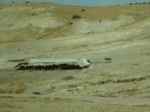
Again we loaded up our bus at 9 a.m., this time to the eastern desert in search of the desert castles.  A largely unpopulated area, this stretches for miles.  We saw few cars on the road, and only a few more tankers and trucks.  It was easy to imagine the past here in the expanses of emptiness.  Surprisingly, though, the desert is streaked black, for again the region is rich in basalt.

The desert castles are not castles in the European sense at all.  Instead, they are the ruins of caravanserais (places where traders stopped with a line of camels laden with trade goods), hunting lodges, or forts.  These date back to 661-750 C.E., to the Umayyads of Damascus.  Once they were richly decorated, but now show us only the hints of what once must have been pleasure palaces of sorts.  They also served as stopping places for pilgrims on the way to Mecca.

Quite different from each other in style and decoration, the three castles fascinated me.

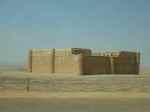
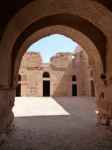
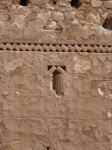
First was Qasr Kharana, sitting in the middle of a barren landscape.  Once a caravanserai, the building had a lower floor with stable areas for horses and camels and a fountain or basin.  The upper rooms were for sleeping.  In all, there were about 60 rooms.

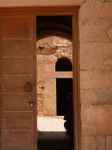
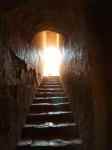
Now it’s still possible to walk through the lower area, climb stairs to the upper level, and wander through low doorways into many of the rooms.  Some are plain; all are small.  The most amazing room, though, was one called The Graffiti Room.  First of all, it’s vaulted and line with carved medallions.  Second, it’s filled with Arabic script – inscriptions that fill walls and frame doorways.  I loved this castle perhaps the most of all, for its stark lines and simple beauty.

The second stop was Qusayr Amra, built about 711 C.E.  “Qusayr” means “little castle.”  Part of a complex that included a bathhouse, a hunting lodge, and a caravanserie, Qusayr Amra is one of the best-preserved of the desert structures.  It is also a Unesco World Heritage Site.

Though now it sits in a parched landscape, in ancient times it was next to a very lush wadi filled with pistachio trees.  There was plenty of water at that time, and there is still a 25-meter-deep masonry-lined well to show that.

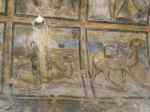
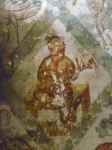
Walking up to the structure, you can see the walls of other areas, and the bath.  Nothing really prepares you for what waits for you – wall-to-floor frescos of hunting scenes but also scenes of partying.  These are not typical frescoes for this culture at all; those would depict  devoted Muslims ascending to the Kingdom of Heaven. Very hedonistic and risqué, it’s clear that they are evidence that the isolation of the site provided some measure of escape from the strictures of religion.  Hunters could relax and enjoy the 8th century frescoes.  I even noticed a bear playing an oud, a stringed instrument – someone had a sense of humor!

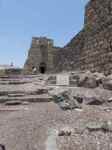
The third desert castle isn’t isolated; it’s in a town that seems like a series of truck stops.  This one, though, has history that is close to us.  Here is where T.E. Lawrence – Lawrence of Arabia – stayed in WWI.  From here he launched an attack against the Turks in Damascus.  Now I want to read Lawrence’s The Seven Pillars of Wisdom.  In a few days, I knew, I’d be in Wadi Rum, where Lawrence once was, seeing those very pillars, and being in the place where Lawrence of Arabia was filmed.

I walked around the inside of the walled area, but concentrated on the room where Lawrence stayed for a while.  To be in the actual room, to sit and look out the window as he must have — a remarkable experience, at least for me.

Back to Amman, it was time to pack.  After drinks and dinner, I did just that.

Categories: Uncategorized | Tags: , , , , | Leave a comment

Day 4: Amman, Salt, Amir Al Amir

Tuesday July 10, 2012

This was our day to see the Citadel in Amman, an area of Roman settlement.  This area of Amman was also a Decapolis in the Roman era.

Our time was spent at the theatre, in very good shape.  As with other theatres, you can stand at one place in front and whisper – while others higher up in the seats can hear you.  The acoustics result from the structure’s design and construction.

I spent a good bit of time in the Museum of Contemporary Arts.  Here I could see clothes and jewelry from various Bedouin tribes, along with pots and mosaics.  For the first time, I was seeing what people wore and had an image of what they might have looked like.

Salt was a bit of a disappointment – we just drove through the town.  The streets were rather narrow, too narrow for us to stop and park.  This was the administrative center for the region during Ottoman rule, but when Trans-Jordan was established, the city of Amman was selected as the new capital.

We left the city heading west, away from Amman’s bare, treeless plain.  A short ride later and we were in Wadi As-Seer, a huge contrast – this is a stream-fed valley with cypress trees, orchards and olive groves.

Our second actual stop was in this greener area, at what has been designated as a “castle” or even a palace in Iraq Al-Amir.  Some guidebooks refer to it as the Palace of the Slave. Here it’s possible to see pre-Roman architecture.  Never completed due to the death of its builder, it sits today as a kind of curiosity.  There are columns and walls – the structure is there, but somehow not quite what I expected.

No one knows exactly how old this place it, though many scholars believe that Hyrcanus built it sometime between 187-175 B.C.E.  Huge slabs of stone (some of the biggest in any ancient structure in the Middle East) form the walls.  Though they are large (the largest is 7 meters x 3 meters), the walls aren’t very thick (only 2 cm or so), which means this is pretty flimsy, really, and susceptible to earthquakes.  In fact, one in 362 C.E. flattened it.  The reconstruction is very good, though, and it’s worth a stop.

I’d hoped for a stop at the Handicraft Village, one of several supported by the Queen Noor Foundation, but it was closed.

Still, the day was another one filled with information, impressions, and questions yet to answer.

Categories: Uncategorized | Tags: , , | Leave a comment

Day 3: The North – Jerash

Monday July 9, 2012

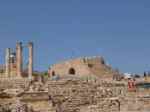
Once more on our bus and prepared with many bottles of water, we headed out of Amman and to the north.  Our single site for the day (which we had passed through on Day 2) was the city of Jerash.  Known as Gerasa, this too was once one of the Roman cities that made up the Decapolis.  Well preserved now and surrounded by the modern city, Roman Jerash had as many as 15,000-20,000 people here in at the height of the Roman era.

Surrounded by the hills of Gilead, this is fertile territory.  Though not on any of the trade routes at the time, it was instead good for agriculture.  It was a cosmopolitan settlement.

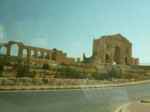
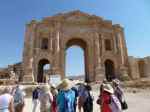
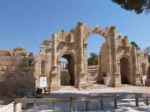
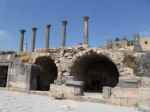
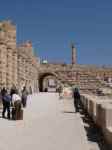
Even now it is possible to walk the area from the entrance through triumphal arches and by the area of the market, the Agora, past the hippodrome and into the walled city itself, with a theatre, baths, housing, and temples.

Jerash peaked in the 3rd century C.E.  After its decline, Christianity was the main religion.  In 747 C.E. and earthquake devastated the area.  After the earthquake, it was basically deserted until the Circassians of Russia settled here in 1878.

The site is immense in its scope, and in very good shape.

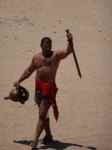
We saw a chariot race and a show with actors portraying Roman soldiers.  While music from the movie Gladiator played over loudspeakers, a narrator explained to us what the Roman soldier wore and how the soldiers lived and fought.  It was a little touristy (ok, a lot touristy) but fun.  And it was in the real hippodrome, not a reproduction.  Can’t beat that!

We wandered the site again after the races – or, as in my case, shopped in the various markets on the way back to the bus.  Surviving the onslaught of sales pitches is another kind of battle, albeit a modern one.  I escaped after spending a number of Jordanian dinars and taking as my battle booty some books (what do you expect for a retired academic?), some small paintings, a shawl, a red and white scarf and a white scarf.

Back on the bus and headed to our hotel in Amman, we talked and drank water, anticipating once more the comfort of our hotel rooms and showers.

By the time I was clean and relaxing with a drink in the downstairs dining area, my calves were telling me I’d been doing not only a lot of walking, but some uphill hiking as well (not much, but I’m not used to uphill in Louisiana).

By now it was clear:  I needed to read a lot more about the Nabateans, who have clearly been significant in Jordan’s past.  More on them later!

Categories: Uncategorized | Tags: , , , | 1 Comment

Day 2: The North – Pella, Um Qais, Aljun

Sunday July 8, 2012

Getting out of the city of Amman, we drove into the north of Jordan, visiting some major sites.  The contrast between the crowded, sprawling urban Amman and the expanses of the North is immediately striking.  Hilly, rocky, yet dotted with the green of trees and shrubs, I realized that Biblical sites were all around us and that I was woefully ignorant of much of the history of this region.

This is the region associated with Jacob from the Old Testament – Jacob, Laban, Rachel, and so on.

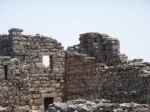
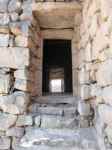
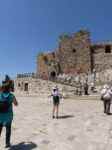
Driving through the countryside, we first stopped at Ajloun Castle, Qala ‘At Ar-Rabad.  This castle was built by the orders of Saladin, one of the most important of the leaders who battled the Crusaders.  His nephew (also one of his generals) built Ajlun Castle between 1184-1188 C.C. (Common Era).  It overlooks the Jordan Valley and three wadis leading into it.  It was an important element in the defensive of the Holy Land against the Crusaders.  In fact, the castle is a counterpoint to  Belvoir Fort, a Crusader castle on the Sea of Galilee in present-day Israel.

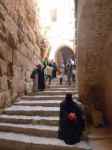
The castle is worth a climb, though I didn’t venture up into the highest part – I have problems at times with stairs and height and don’t push it.  Rather, I people-watched as a number of other visitors came in.  A family of Saudis entered, chattering children in tow.  A woman fully veiled in black sat on the steps going up into the castle.  I wandered through the small museum, and spent most of my time taking photographs.

I’ve read about the Crusaders for decades, but here I was in a place that was key in the defense of the Muslim lands and people.  One book I now want to read is one that was written from the point of view not of a Crusader, but from one of the Muslims.

As we drove through the communities and the countryside, our tour guide, Abdullah, filled us in on the history of Jordan, including many references to Biblical places and people and events from the Old Testament.  Again, I was reminded that I was now in part of the Holy Land.

I was in the Gilead Hills – the phrase “the balm of Gilead” echoed in my head on and off all day.  No longer an empty place name, Gilead now had concrete reality for me.
Indeed, we were in what was one of four specific “kingdoms” – this was east of the Jordan River.  In Amman we were in another one, Amon.

Today our journey took us to Ajlun Castle, also known as Qala “at Ar-Rabad.  Built between 1184-1189 C.E. by a nephew of Saladin (and on his orders), the Castle looks over the Jordan Valley and 3 wadis leading into it.  It was an important defensive position for Saladin and his troops – it was in counterpoint to Belvoir Fort, a Crusader castle on the Sea of Galilea in present-day Israel.

Near here, the prophet Elias (Elijah) was born.

I explored the lower part of the castle, not venturing into the upper areas – but I enjoyed taking lots of photographs and examining the displays in the small museum there.  It was also interesting to see other tourists exploring the site – Arabs from Saudi Arabia, entire families, women in burqas.  I was far from bored.

The second stop of the day was in yet another Roman Decapolis, Pella.  Pella has been inhabited for perhaps one million years.  At its peak in the Byzantine era, perhaps as many as 25,000 people lived here.  First we sat on the shaded porch of the Pella Guest House and sipped mint tea while listening to a lecture on the chronology of the site.  Because Pella was inhabited for so long, it was a natural site for such an historical overview, from the Stone Age through the destruction of the site due to an earthquake.

After the lecture, we were allowed some time to roam the site itself.  Looking from the entrance to the site up to the tops of the hills above, it was easy to see areas where caves are and to imagine people living here.

Then it was on to lunch at yet another site, Um Qais, known as Gadara in the Bible.  About 110 km north of Amman, this is the site where Jesus cast out demons out of two men and sent the demons into a herd of pigs, which then leapt off the mountain into the Sea of Galilea.

Yet today, looking at the distance from the precipice where the pigs might have leapt and looking at the Sea of Galilea (known now as Lake Tiberius), it’s difficult to imagine that – the water is in the distance, not at the bottom below me.

This was one of the Roman cities in the Decapolis.  From its top, where the Rest House is located, you can see the Golan Heights.

I skipped lunch (the heights were too much for me and panic attacks aren’t fun) and wandered on the level of the Roman ruins.  This is an area of basalt, and while the theatre looked familiar in design to me from other Roman theatres and amphitheatres, what makes it strikingly different – the use of basalt.  Here you see black columns – basalt – not the white marble or limestone that is more usual.

In the area are other structures and areas common to any Roman settlement of this size – a nyphaeum, a temple, and so on.

For a while, I just sat on a step and looked at the landscape.  It was very quiet – I could hear birds and the wind – and occasionally (but not very often) the noises from an occasional car on the modern highway below.

As I walked out of the site, I looked once more at the ruins of a more recent settlement – a late 19th century Ottoman village.  It was abandoned in the early 20th century when the Ottomans were forced to move elsewhere.  Now the roofless houses herald your entrance into and exit from the Roman site.  There is some talk of renovating these houses into guest houses for tourists, but nothing has been done.

Much of the landscape is sandy – yet there is green too.  I saw almond trees and olive trees, pomegranate trees and tamarind trees.

Since we could see the Golan Heights from Um Qais, it was a reminder just how close borders are here.  Israel isn’t that far.  Though Jordan has been at peace with Israel since 1994, at one time there were 734 checkpoints in the Jordan Valley.

This was a long, rather tiring day.  Interesting, to be sure, but tiring.  By the time we got back to the hotel,  like everyone else I was ready for a shower and dinner.
After all, tomorrow was another day out of Amman.

Categories: Uncategorized | Tags: , , , | 1 Comment

Amman, Jordan — Arrival and Day One. Or, Cheryl Gets Happy at a Hamman

The flight on Friday was just over two hours from Athens.  We landed about 6:15 p.m. and were met by someone who helped us through the Visa and Passport Controls.  Upon exiting there, we picked up our baggage.  I changed some money first, and then it was off to the hotel.  A new twist:  upon our exit, we had to put our baggage through a metal detector machine.  Following our representative from the travel agency, we walked a short way and met our driver.  

The airport is about 35 minutes out of Amman. We landed at Queen Alia International Airport, named for the third wife of the late King Hussein.  She was killed in a plane crash near the site of the airport.  Our ride to Amman was on a road less than 2 years old, and a new road was being constructed right beside it.  

Farming surrounded us as we dr0ve.  Large-scale farming of vegetables, I’m told, is intense in that area.  We saw huge homes as well as shanties and tents.  Once I saw a group of camels.  The land looked as I imagined that it might — while there is green (trees of different types, mainly), there wasn’t grass.  Rather, the soil itself was part of the color scheme — sandy and rust-colored.  

Amman is the largest city in Jordan as well as the capital.  The city’s limits are spreading and much building construction can be seen everywhere.  As of 2008, somewhere around 2.2 million people live in Amman, with another 850,000 in surrounding communities.  The country’s population in 2008 was about 6.2 million people.  No wonder there’s building going on everywhere in Amman.

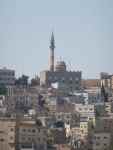
Amman grew up around 7 jebels, or hills – and is compared to Rome as a result. Now it has spread and encompasses more than 20.  Jebel Amman is the main hill.  Navigating the city is a mystery to me — I know there’s some clue with the roundabouts that are numbered.  

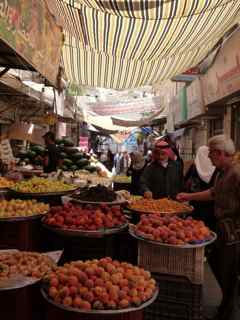
However, I am clueless.  Yesterday when I went out with a few others for shopping in the morning, we took a taxi.  After shopping in the gold souk and spice and food souk, we went separate ways.  One group headed back to the hotel.  Another woman from the group and I sat and had soft drinks and water, grabbed a taxi, and I gave the taxi driver the paper the receptionist had written for me with the name of our destination: the Al-Pasha Turkish Bath.

Apparently the most famous of the Turkish baths, the Al-Pasha lies near Rainbow Street and close to the Ahliya School for Girls.  Our driver got us to the area, but then had to stop several times and ask for directions.  Believe me, I could understand why — I really couldn’t find a lot of street signs.  

Before too long, though, we were there.  We were early, since our reservations were for 4 and it was just after 2.  However, that didn’t seem to be a problem and in about 15 minutes, we were in our swimsuits and heading into the hammam.  The Turkish baths were an Ottoman tradition, based on earlier Roman and Islamic designs.  

This hammam, as is common, allows women in at a separate time from men.  I’d been in one in Istanbul almost 10 years ago, and I was determined to find another one.  This hammam was extraordinary.
As soon as I entered, I was directed to shower and then ushered into a steam room — marble, of course.  Armed with a glass of iced hibiscus tea, I sat and sweated profusely.  I was more worried about slipping on the marble and not being able to complete the afternoon than I was about the heat.  The steam rose to the domed ceiling in which multicolored glass circles allowed light into the small space.  With enough steam, it was possible to simply forget about any outside world at all.

Next, I was told to shower again and then enter the jacuzzi.  I removed my plastic slippers and carefully grabbed the rail as I stepped up and then down into the jacuzzi.  Once more the steam from the water rose and hovered.  I sat for a few minutes and then moved even lower in the water, until only my head was above the surface of the water.  I could have stayed there, but I didn’t.  The lights — rather arabesque metal lanterns with electric bulbs — softened the shadowed area.  

Once out of the jacuzzi, I was led to a marble slab on a solid, raised marble rectangle.  It was time for what I term the Brillo pad experience.  Probably, it was a loofah.  It just felt rougher.  This is where the attendant carefully removes dead skin cells by quickly and rhythmically scrubbing every square inch of the body.  I think I lost a layer of skin by the time it was over.  I began by lying on my back and then changed so that I was face-down.  I had no idea about anything other than the experience itself.  Even with the scrubbing, I almost fell asleep.

When the last bowl of water was sluiced over my head, I was helped off the table.  I assumed that was it, but no — I was then moved to another marble table.  It was time for a massage.  Once more, the quiet broken only by the sounds of the oil being massaged over me and by voices that seemed distant, I nearly fell asleep.  Time simply had no meaning.

The massage over, I thought it was time to go back up front, but was mistaken again.  I was led to a sauna, and directed to stay for 10 minutes.  By the time I got out of there, I wasn’t sure that my legs were going to work.  That’s how relaxed I was.  

Once more going to the shower, I shampooed my hair and body.  As I headed back to the changing room, I was handed a huge white towel — nice and warm.  I toweled off, changed, and sat in a small room with a fish tank.  TAhere I was given a small glass of mint tea.

I exited, paid the really cheap rate for the heavenly experience I’d had, and met with the other woman from our tour.  We walked to Rainbow Street, finally got a taxi, and headed back to our hotel.  

The hotel, the Al Qasr Metropole, requires entering guests (or indeed anyone) to place any purses or backpacks or bags on a belt so that they are subjected to metal detection.  Just a precaution made necessary by a few bombings of major hotels several years ago.  I happily placed my backpack on the belt, stepped through the metal detector myself, retrieved my backpack, and took the elevator to my room.

It was time for a nap.  Drinks and dinner later (at the hotel).  Back in the room and in bed by midnight.

Shopping in the gold souk and then a hammam.  Not a bad first full day in Amman!ImageImageImageImage

Categories: Uncategorized | 2 Comments

Sanctuary


On Thursday, just a couple of days ago, I stayed around the apartment all morning washing clothes and getting ready for my trip to Jordan.  In the afternoon, though, I took part in a turtle release — something new and very satisfying.

My friend Jane volunteers at the turtle rescue center in Glyfada, an upscale neighborhood of Athens, right on the water.  I’ve heard her talk about this for a year, but this was my first time there, and I suspect it won’t be my last.

Volunteerism is such a new idea in Greece.  Such organizations don’t have an easy time of it, either.  From what I could see, this one manages — with barebones equipment and donated buildings.  There are several train cars that were donated, and these have been fashioned into an office, a teaching space, a living space, a giftshop, and the like.  The “hospital” tanks are under a kind of Quonset hut structure, and the tanks where turtles go when they’re healthier are outdoors.  Then there are a couple of tanks where they go just before they are released.

I didn’t realize that Greece has 3 kinds of turtles — green, loggerhead, and leatherback.  Two of these nest in Greece — the green and loggerhead.  Most of the turtles rescued here are loggerhead turtles, though right now there is one green.

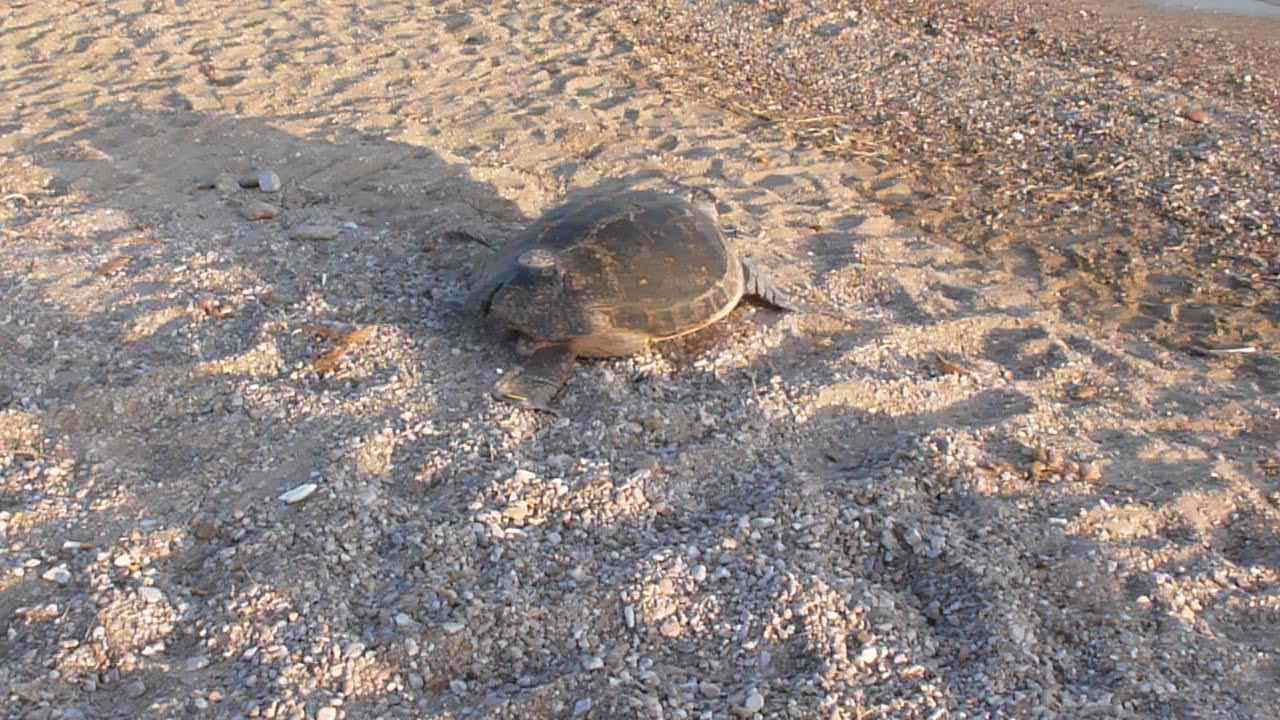
Turtles come here from all over Greece.  All have been injured in some way — many deliberately by people.  The turtle being released this time, for example, had been hit in the head probably by some kind of tool on a boat.  The injury was right between the eyes on the top of the head, a deep wound that has healed now but which still leaves a clear indentation where the damage was.  She was supposed to be released on Wednesday but this was delayed for a day because of an emergency  — a new male was brought in with a nail in his head.  I saw him with it removed, but saw the x-ray and was horrified.  Some turtles, like the smallest one there, had some other problem or illness.  The small turtle had been born with a weak flipper and wasn’t able to migrate with the rest — it was found in winter and is now almost ready for release.

Every day begins with feeding and observations. Someone records constantly for each turtle — feeding notes, notes about how often the turtle moves or swims, notes about all sorts of things.  Most of the workers are either non-paid volunteers or European Union interns from any number of countries.  There is a director.  And there is the guy who runs the center and works very hard — not a biologist at all, but someone who began as a volunteer out of his own interest and who has learned what he knows from study and reading — and hands-on work.

The release I was part of was quite moving.  We took her to the beach where she was rescued, an hour or so down the coast toward Cape Sunion.  Another turtle had been released there perhaps two weeks earlier, and in those intervening two weeks, a touristy set of umbrellas and beach lounges — and a cantina — had popped up.  Nevertheless, the release continued.  We kept curious beachgoers at a distance as the turtle was first taken out of her box and then found her own way to the water.  I must admit that I was very moved by watching her dive right in.  As she moved fairly quickly out away from the shore, though, she seems to surface more often than usual for a while.  More experienced volunteers were concerned; apparently this is not a good thing.  She finally stopped surfacing, however, and we turned away when we couldn’t see her anymore.  For a short while we were worried about the motorboat that reved up and headed toward her direction.  Motorboats cause a lot of injuries, clearly, with the blades of the motors.  This boat, to our relief, moved away from the turtle, and we felt safe.

After we left the beach, we went back to the rescue center and put together a late dinner of olives and feta, bread and wine.  Some chicken and sausages cooked on a grill but I was quite full with the mezedes.  After good conversation and laughter, we left.  I was home in my apartment by 12:3o on Friday morning.

I’ll go back.  I’m already thinking of donating some equipment — the center clearly is running on a barebones budget.  I may volunteer there some myself.

Categories: Uncategorized | Tags: , , , | Leave a comment

Things Greek

In my second week here in Greece, I continue to contemplate the state of the state.  I do this while (1) dodging the heat (which has, thankfully, dropped to the low 90s), (2) listening to my neighbors (it’s not that hard, believe me), (3) observing from my favorite cafe, and/or (4) riding the trolley.

I also attended a very long poetry reading last week, one that went on.  And ON.  Longer than planned, clearly, or than appreciated.  Even that evening, though, provided interesting people-watching time.

Greece has been in the news so much — everywhere — and with reason.  Clearly, the financial and economic issues have been widely reported in newspapers and online sources for months.  When Prime Minister George Papandreou resigned, an interim PM was named , a non-politician, a technocrat.  The May elections — and the subsequent failure of any of the top three parties to form a coalition government — meant that there was another election called for June 17, and yet another interim PM named.  There were demonstrations held after those elections.  The June elections–in which conservative New Democracy placed 1st, far-left Syriza placed second, and socialist PASOK came in 3rd — were over quickly and reported quickly.  New Democracy has formed a coalition government, though neither Syriza nor PASOK is really muscling into this.  The second elections were in fact rather desultory, at least to me — no demonstrations at all afterwards.

Not that the problems are over.  Not at all.  Now people are wondering when — not really if —  crash will come.  Will Greece stay in the euro?  What happens if it doesn’t?  For a while, there was a predictable run on money in banks — lots of people took their money out, and a number moved their money to other European banks.  One report, in fact, contends that 50% of the money in Greece is not in banks at all.  People are keeping money in safe deposit boxes (if they can get them) or in safes.  Predictions about the outcomes continue to appear daily.

What I have noticed now — some of which I’ve mentioned in earlier posts — is more businesses closed.  On the trolley ride home from Syntagma the other day, I noticed that more than one block now was composed of empty shops.  Long-time shops have closed.  In my neighborhood, I noticed that my local bank branch has been closed, leaving me to believe that the employees are not employed any more.  In news reports, my bank name is mentioned; one merger has gone south, and I hear that there is a lawsuit over breach of contract.  In the meantime, another Greek bank seems to be interested in acquiring the bank I use.  Greek banks aren’t very popular these days, as you can imagine.  No one really wants to acquire them, at least no one outside of Greece.  My bank was most recently affiliated with a French bank, but it doesn’t want that tie anymore.  One large French company, Carrefour, is closing all of its stores here in Greece, I am told.  What will happen to the stores is a mystery.  Will the previous Greek company regain its ownership?  Who knows?

Beyond the huge chains like Carrefour, lots of small stores are gone.  These are for the most part family-owned businesses.  I noticed that a neighborhood meat market was gone; it was here six months ago.  Some stores have moved to smaller spaces, hoping to remain viable.

As far as store hours (set by government regulations), stores now close earlier.  Overhead costs are kept down.  Some remain open on late nights, but close at 8 instead of 10, perhaps.  The little computer store near my apartment is open, but I’ve never managed to walk by it when it is; I’ve seen it from the trolley as I pass.  Even the large department store two blocks down closes earlier now, and though I’ve seen customers there every time I’ve gone by or in, it isn’t packed as it has been in the past.

Coffeeshops and kafenions are open, though I often notice fewer customers.  I’m just selfishly glad my favorite hangout is still open, Cafe Libre.  It’s a family place, a cafe/bar, and the wait staff are always personal and friendly.  They remember me now, as they remember my friends who live near there. I have yet to see it quite as crowded as even last year.

Yet even as things visibly reflect changes, I am told that some people keep going as though nothing has changed.  In a small town near Athens, a friend told me, on a weekday night when she was there recently all the shops and pharmacies were open, everyone was out and about and carrying on as though nothing had changed.  Her theory:  they’re in denial.

I don’t know about that, but in a sense they do have to keep going.  How much are they conserving at home?  What are things like in their homes? We can’t tell that.  The cliche about life going on rings true here.

Since one change that affects me is the closing of our local post office, I found out the one we are now associated with — so far away that it’s easier for me to go to Syntagma and use the one there.  Of course, when I stopped in the other day, the lines were incredible.  I guess one day I’ll just have to go and wait in one of those lines for a chance to buy stamps.  For years you could buy stamps (grammatosima) at almost all the peripteros, the little sidewalk kiosks, self-enclosed shops offering almost everything.  Except stamps now.  I can get trolley tickets at the one nearest me, as well as buy minutes for my Greek mobile (cell phone).

There are fewer people around; Athens feels as it does in August, when people traditionally flee Athens for vacation spots in Greece and elsewhere.  There aren’t nearly as many cars around, either.  When I first arrived in Athens, I immediately noticed that in my neighborhood there were parking spots available, which has been rare indeed.  Not now, though.  In discussions, friends have told me that if a family has two cars, they’ve gotten rid of one, and that some people have dispensed with owning a car at all.  Fewer cars on the road, too, as a result.  And as more people leave Athens, either for their villages or for jobs away from Greece, those streets will be even less full than now.

It’s all a waiting game, I think.  Yet I anticipate more discussions with friends who are Greek or who are expats living here.  Lots of learning yet to come.

And in the midst of this (or the mist of it, as some students have insisted to me in their writing), I see efforts to improve life here.  Volunteerism, a relatively new idea here, is alive and well.  Struggling, perhaps, but thriving nonetheless.  I have friends involved in regular beach cleanups.  I have a good friend who is involved in turtle rescues — she volunteers at a center in Glyfada.  I went with her yesterday to a turtle release — a joyful experience, tempered by the discovery that the beach where they often release turtles has, in the past week, been invaded by permanent beach umbrellas and a cantina.  More about that later.

People go to work.  They shop as they need.  They go out, albeit less often and probably spending less.

Life continues.

Categories: Uncategorized | Tags: , , , , , | 2 Comments

Blog at WordPress.com.